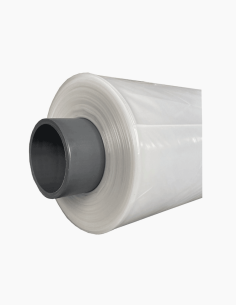
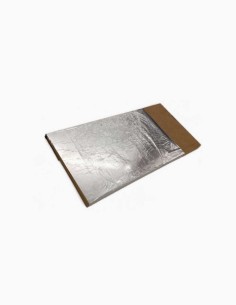
Protective films are technical solutions designed to protect surfaces, objects and sensitive materials from abrasion, dust, dirt and contaminants during storage, handling and transport processes. They are used in both domestic and professional environments, especially in preventive conservation, logistics, archives and museums, where preserving the physical integrity of objects without altering their original characteristics is essential.
Types of protective films according to their use
Protective films for conservation and archival storage
These films are made from stable plastic materials, free from plasticizers and aggressive additives, making them suitable for prolonged contact with paper, photographs, textiles and artworks. They are commonly used in preventive conservation tasks and in the creation of protective microclimates for sensitive items.
Protective films for packaging and transport
Designed to protect surfaces during handling, shipping or temporary storage. They act as a physical barrier against abrasion and dirt, reducing risks associated with logistics handling and transportation.
Benefits and technical characteristics
These films address problems caused by direct contact, friction and the deposition of particles on sensitive materials. They are particularly useful for long-term storage, temporary exhibitions and transport processes. Their main advantages include dimensional stability, high transparency, mechanical resistance and compatibility with delicate materials. They are recommended whenever reversible, non-invasive and technically safe protection is required as part of maintenance and conservation strategies.
For comprehensive protection, it is advisable to combine them with humidity control solutions and temperature control systems, especially in professional conservation environments.