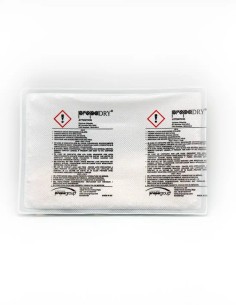
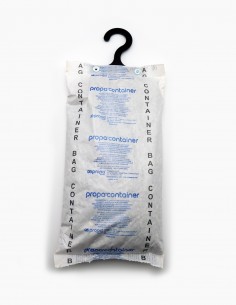
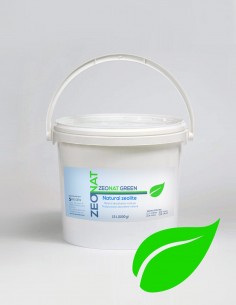
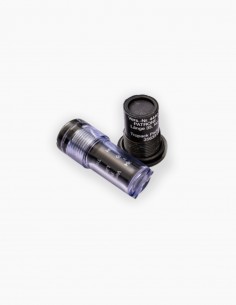
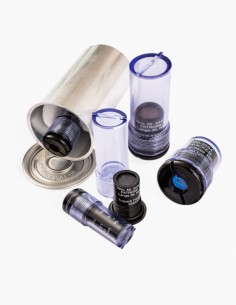
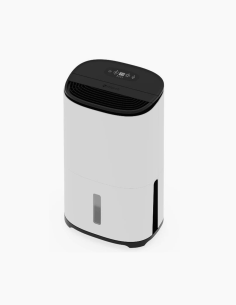
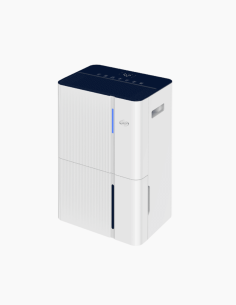
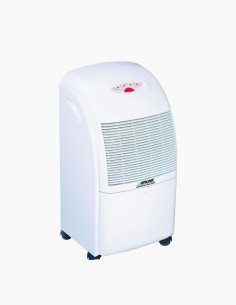
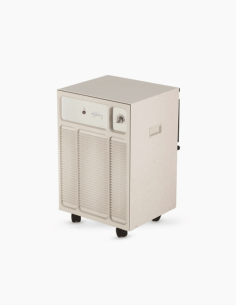
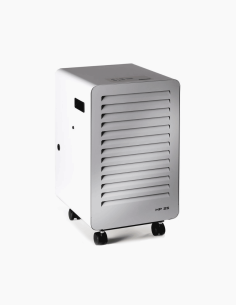
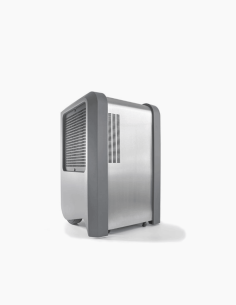
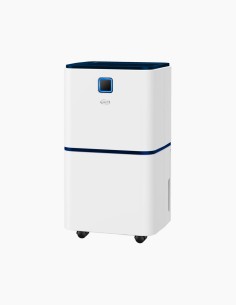
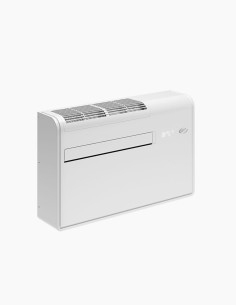
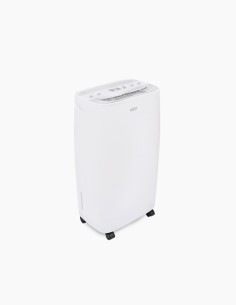
Dehumidifiers for humidity control are devices designed to remove excess moisture from the air, preventing condensation, mold, and deterioration of sensitive materials. This category includes technical and professional dehumidifiers used in contexts such as industrial storage, hospitals and museums, basements and garages, logistics processes, and demanding domestic environments where microclimate stability is critical for the preservation and protection of goods and structures.
What problems does a dehumidifier solve?
A dehumidifier is specifically designed to reduce relative humidity below levels that promote condensation and mold growth. This is essential for protecting hygroscopic materials, metal parts exposed to corrosion, or archives and works of art that may be affected by unsuitable environmental conditions. Humidity control also improves comfort in inhabited spaces and reduces risks associated with excessively humid environments.
Types of dehumidifiers included
Technical benefits and applications
Dehumidifiers for humidity control in this category are designed to:
- Reliably and continuously reduce relative humidity, minimizing risks of condensation and mold in structures and sensitive materials.
- Protect inventories, stored products, and electrical equipment from corrosion and damage caused by humid environments.
- Integrate easily with environmental control systems and professional hygrometer monitoring for precise microclimate tracking.
These devices are recommended for industrial applications, logistics, preventive conservation of cultural assets, and technical spaces. Combined with other environmental control tools such as humidifiers or measurement solutions, dehumidifiers ensure a stable and reliable environment that protects both goods and facilities.